API vs SDK: The Difference That Actually Matters
Coding
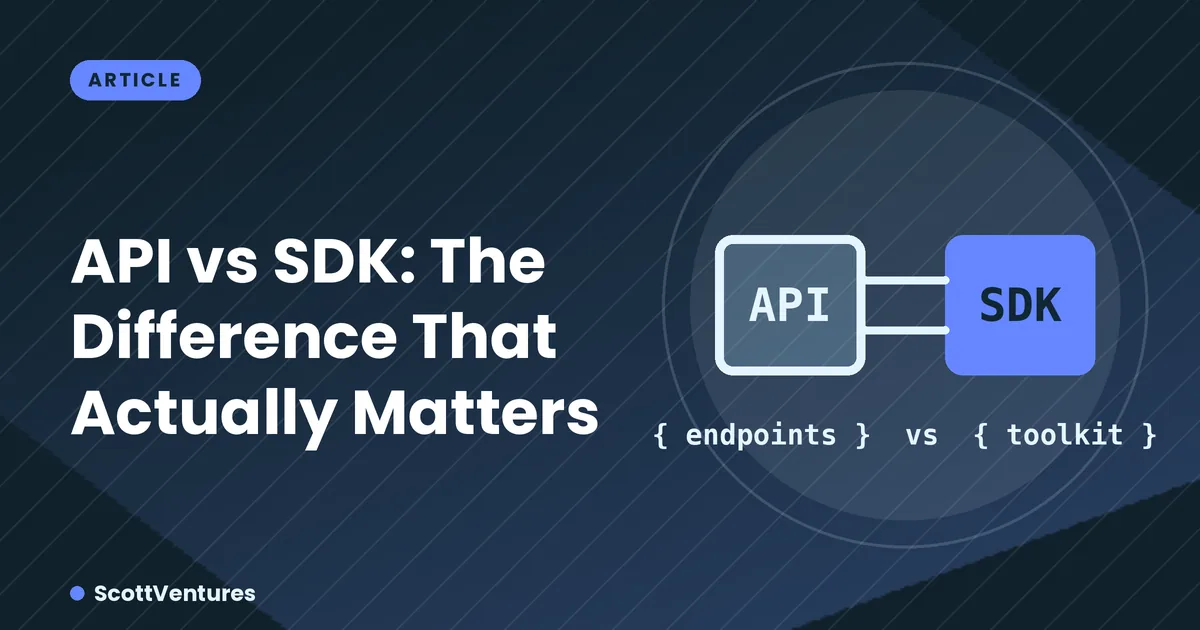
The two terms get used almost interchangeably in casual conversation, but they describe different things — and picking the wrong one for a given job means writing (or maintaining) code you didn't need to.
An API is a contract, nothing more
An API — Application Programming Interface — is a specification: these endpoints exist, send a request shaped like this, expect a response shaped like that. It doesn't care what language you use to talk to it, because it's just an agreement about inputs and outputs, usually over HTTP.
An SDK is code that already speaks it
A Software Development Kit is a library, written in a specific language, that wraps an API's raw requests into normal function calls. Instead of hand-building an HTTP request with the right headers and JSON body, you call client.createUser(name, email) and the SDK handles the wire format underneath.
# Talking to the API directly
POST /v1/users
{"name": "Ada", "email": "ada@example.com"}

# The same thing through an SDK
client.create_user(name="Ada", email="ada@example.com")
When to reach for each
If an official SDK exists for your language, use it — it saves you from re-implementing authentication, retries, and error handling that the SDK authors already solved. Go straight to the raw API when no SDK exists for your stack, when you need a level of control the SDK doesn't expose, or when pulling in an extra dependency isn't worth it for one or two calls.
One more distinction: every SDK is built on top of an API, but not every API has an SDK. The API is the source of truth; the SDK is a convenience layer someone chose to build around it.
Comments